You have a website. People are finding it. From Google, from Instagram, from LinkedIn, from someone who heard about you and went looking. You can tell from your analytics board.
But nothing is happening. You still haven’t gotten any calls or enquiries. No sales. They arrive, and then they leave, usually within the first thirty seconds.
So you start mentally listing what needs fixing. “The design feels dated”, “The layout could be cleaner,” “Maybe the homepage needs restructuring,” “Maybe the load speed is hurting you on mobile,” “Maybe you just need a new theme“.
But here is what none of those things will fix. And here is the real reason your visitors are leaving:
Your website is written in your language.
Your audience is searching for theirs. The moment they land and do not find it, they leave. Because your page does not speak to them.
What Your Visitor Is Actually Doing When They Land
Nobody reads a website. Not on the first visit. They scan.
In the first ten seconds, a visitor is doing one thing: looking for themselves. They are scanning your page for evidence that this page was written for someone in their exact situation. They are looking for the words they used when they typed their problem into Google. The phrases they have been using when they describe their situation to friends or colleagues. The specific pain they have been sitting with that brought them here in the first place.
If they find those words, they read further. They start to believe that this page was built for them. If they do not find those words in the first ten seconds, they leave. Quietly, without comment, and usually without ever coming back.
The design is irrelevant at this point. A beautifully designed page that speaks the wrong language fails just as completely as an ugly one. The visitor is not evaluating aesthetics. They are looking for recognition. And recognition only comes from language.
What a Language Mismatch Actually Looks Like
When a founder writes their own website copy, which most do, at least in the early stages, they almost always write in their own language. The language of expertise. The vocabulary of someone who has spent years building competence in their field.
But this is the problem. The founder knows what they do. They describe it accurately, professionally, completely. And their potential client reads it and thinks: this might be exactly what I need, but I am not sure, because I have never heard it described this way before.
That uncertainty, that friction, is enough to make them close the tab.
Here is what a language mismatch looks like:
- Founder language: ‘We offer strategic digital solutions that drive measurable business outcomes through integrated online presence management.’
- Audience language: ‘Your website is getting visitors. None of them are calling you. We fix the copy and positioning so the right people recognise themselves on your page and reach out.’
Same service. Completely different experience for the person reading it. The first sentence is technically accurate. The second one makes a visitor stop scanning and start reading. The difference is not creativity. It is whose language is being spoken.
Where Your Audience’s Language Is Already Waiting for You
The words your audience uses to describe their situation are not difficult to find. They are freely available in the places where your potential clients describe their problems without the filter of professional presentation.
1. Reddit Threads
Search for the problem your service solves on Reddit and read the complaints. Not just the polished questions but also the frustrated rants, the ‘am I the only one’ posts, the threads where someone describes their situation with raw emotional accuracy. These are your audience in their unguarded language. The phrases that appear repeatedly in these threads belong on your webpage.
2. Google Autocomplete
Before your ideal client finds your website, they type something into Google. The autocomplete suggestions, the phrases Google populates as they type, reveal exactly how your audience frames their problem before they know what the solution is called. If your copy uses the solution vocabulary and they are searching in the problem vocabulary, the language mismatch begins before they even arrive.
3. Customer DMs and Past Enquiries
The messages you have already received from people who eventually became clients contain your highest-converting copy. The exact phrase someone used when they first reached out to you, before they knew your terminology, before they had read your website, is the phrase that made them reach out. That is the language of a person in their Bleeding Moment. It belongs above the fold on your homepage.
4. Competitor Reviews and Comments
The comments on your competitors’ content and the reviews of their services, reveal what your shared audience is frustrated about, what is not being solved for them, and what they are still searching for. These are not complaints about your competitor. They are a brief for your copy.
5. Sales Calls and Voice notes
If you have ever spoken to a potential client before they bought, record and listen. Listen for the repeated phrases. The way they describe the problem in their opening sentences. The metaphors they reach for. The specific frustrations they name without being prompted. These are the phrases that need to be on your website, because they are the words your audience uses to describe the exact moment that brought them to you.
The Homepage Structure That Converts
Once the language is right, the structure becomes significantly easier to get right, because every section now knows who it is talking to and what it needs to say. The five-part structure that Ensuite 9 uses for every website project starts with:
1. A hook that names the outcome in the audience’s language. Not what you do. What they get. Then;
2. A problem section that describes their current situation so precisely they feel seen rather than sold to. Then;
3. A solution section that frames your methodology around their situation rather than around your credentials. Then;
4. Specific proof or client results described in outcomes, not accolades. Then finally;
5. One clear call to action, not four options, not a menu, one specific next step that matches where a visitor in their Bleeding Moment would naturally want to go.
Remove any of these sections and the page stops converting. Include all five in the audience’s language and the result is a page that works because it speaks to the right person at exactly the right moment in exactly the language they were already using.
Why Design Cannot Save Bad Copy
The most expensive mistake a founder makes with their website is investing in design before investing in copy.
A redesign is visible. It feels like progress. The new layout, the new colour palette, the new photography, all of it signals investment and seriousness. And then the traffic continues to arrive and leave at the same rate, because the words on the new pages are still the wrong words.
Design amplifies your message. If the message is wrong, the design amplifies the wrong message more beautifully. If the message is right, if it speaks precisely to the person scanning for themselves, the design makes it impossible to miss.
At Ensuite 9, every website project begins with a copy and language strategy before a single design decision is made. Because the words have to be right first. Everything else is the vehicle that delivers them.
The Test You Can Do Right Now
Open your landing page. Read the first line, the headline above the fold, before the scroll. Ask yourself honestly: does this line describe what my audience is experiencing in their words or does it describe what I offer in mine?
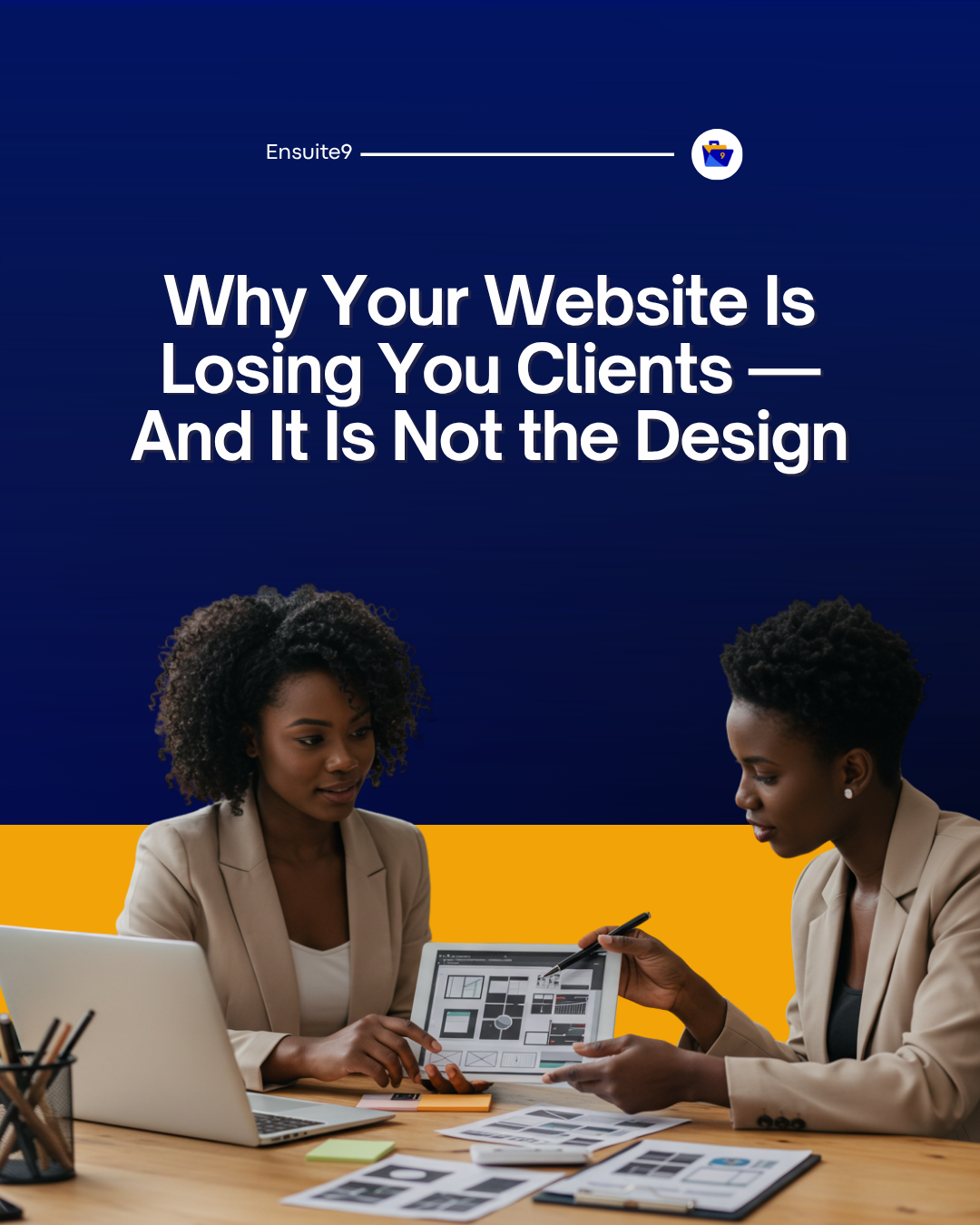
If it is the second one, your page has a language problem. Not a design problem. Not a speed problem. Not a layout problem. A language problem. And the fix is not a redesign. It is a translation.
Need help with this? Book a free 30 minutes clarity call with us right now.